



A jockstrap should feel secure, not punishing. The waistband should stay flat, the pouch should hold everything without pinching, and the leg straps should remain in place when you sit, walk, and squat. If you are constantly pulling it back into position, it is probably too large or the wrong cut. If it leaves deep marks, restricts movement, or creates numbness or sharp pressure, take it off and try another size or style.
Measure your body, not the number on your jeans
Start with a soft measuring tape and the size chart for the exact jockstrap you want. Pants often sit lower than underwear and their labeled waist can differ from the body's measurement. BIKE Athletic's current guidance tells shoppers to measure the natural waist and avoid pulling the tape tight. Timoteo also sizes its jockstraps by waist range, but its ranges do not match BIKE's exactly. A medium is not a universal unit.
Keep the tape level and breathe normally. Then compare the number with the brand's chart for that specific style. Do not assume the size you bought from another label, or even another cut from the same label, will fit the same way.
The waistband should stay put without digging in
A good waistband lies flat and stays where you place it. You should be able to bend, sit, and take a full breath without feeling a hard edge bite into your waist. Rolling, sliding, or a gap at the back usually means the band is too loose, stretched out, or designed for a different rise.
Low-rise jocks sit closer to the hip bones. Traditional athletic cuts may sit higher and use a wider band. That difference can change where you measure and how the garment feels even when the label shows the same size.
The pouch should support, not compress
The pouch should contain you fully and keep you from moving around more than you want. It should not force everything into one painful position, press a seam into sensitive skin, or spill at the sides. Support can feel firm without becoming pressure.
Pouch shape matters as much as waistband size. Some are flat and close to the body. Others are contoured, stretchy, or cut with more depth. If the waistband fits but the pouch does not, changing size may simply create a new problem. Look for a different pouch construction instead.
Leg straps belong under the cheeks
The straps should run beneath the butt cheeks and return to the waistband without twisting. They need enough tension to help anchor the pouch, but they should not saw into the skin or creep into an uncomfortable fold.
Thigh size, seat shape, strap width, and where the straps attach all affect this part of the fit. A person with thicker thighs may prefer a softer or wider strap, while someone whose straps keep hanging loose may need a smaller size or a different cut. The answer is not always to size down.
Know what kind of jock you bought
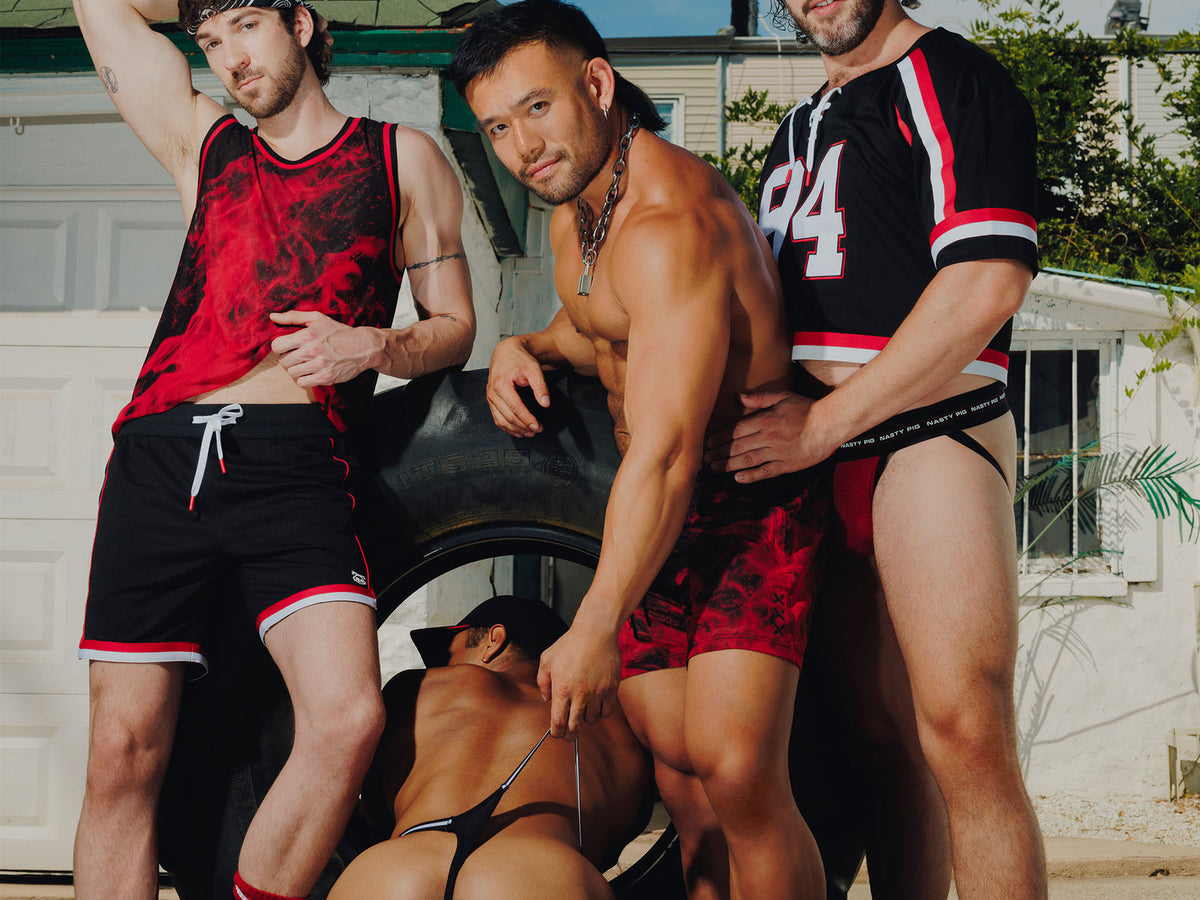
An athletic supporter, a fashion jock, and a cup jock are related garments, not interchangeable ones. A cup model includes a pocket designed for protective equipment. Many underwear and nightlife styles do not. BIKE, for example, identifies its Swimmer Jockstrap as a supporter pouch rather than a cup pouch.
Materials change the feel too. BIKE's current range includes nylon-cotton blends, modal with spandex, and polyester-elastane. Timoteo and CellBlock 13 list everything from stretch nylon to neoprene and coated fabric. Cotton-rich fabric may feel firmer and absorb more moisture. Modal can feel softer. Neoprene and coated finishes feel more structured and need different care.
If you are choosing a jock for a gear night rather than a workout, the fit test stays the same. You still need to move, sit, and wear it for hours. Our guide to your first leather night explains why checking the event's actual dress code matters more than guessing.
Do a five-minute fit check
Before removing tags or wearing it out, check the store's return rules. Underwear often has stricter hygiene restrictions once packaging is opened or the item is worn.
If the policy allows a careful try-on, stand normally, sit in a chair, walk across the room, and do a few slow squats. Check the waistband, pouch, and both straps after each movement. Nothing should twist, slide, pinch, or require an immediate adjustment.
Then put on the jeans, shorts, or gear you expect to wear over it. A wide waistband may show above low-rise pants. A thick seam can become obvious under fitted trousers. A swimmer cut may disappear more easily. Those are cut choices, not fit failures, as long as the garment stays comfortable and supportive.
If you are between sizes
Use the brand's guidance for the specific fabric and cut. BIKE notes that cotton has less give while stretch blends allow more flexibility. Still, sizing down should not be a shortcut for a pouch that is shaped wrong, and sizing up will not fix straps that attach in an uncomfortable place.
Choose the size that keeps the waistband stable without pressure. If neither size gets the pouch and straps right at the same time, switch styles.
Wash the fabric you actually own
Read the sewn-in care label. BIKE's current cotton, modal, and polyester-elastane jocks allow machine washing and low tumble drying. Timoteo's coated Liquid Night style requires cold washing and hang drying to avoid peeling, while its neoprene styles allow low tumble drying or hanging. One rule does not cover every jockstrap.
Wash after wear, especially after a workout or a long night out, and let the garment dry fully before it goes back in a drawer. Retire it when the waistband no longer recovers, the straps remain stretched, seams rub, or the pouch no longer provides the support it once did.















Leave a comment